



EROthots
Servers And Networks
Built To Belong To You
VPNs, firewalls, cloud infrastructure and the hardening that keeps all of it standing. Configured remotely on the equipment and accounts you already own, then handed over with the keys, the notes and no reason to call us again.
Most of this work is sold as a subscription or a retainer. We would rather build the thing properly, explain what is on your machine, and leave you able to run it. That is a worse business model and a much better outcome for you.
What A VPN Does?
And Who It Hides You From
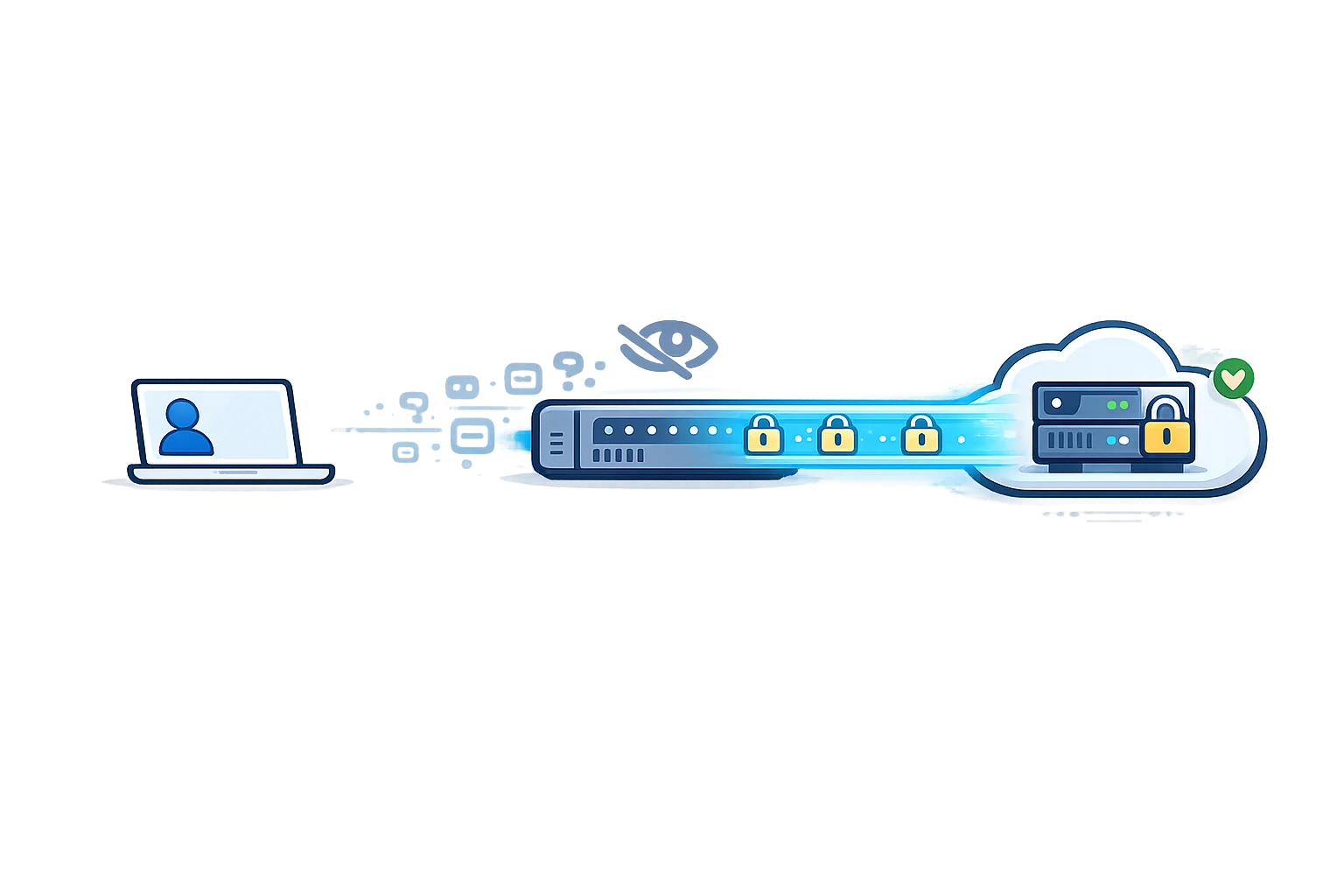
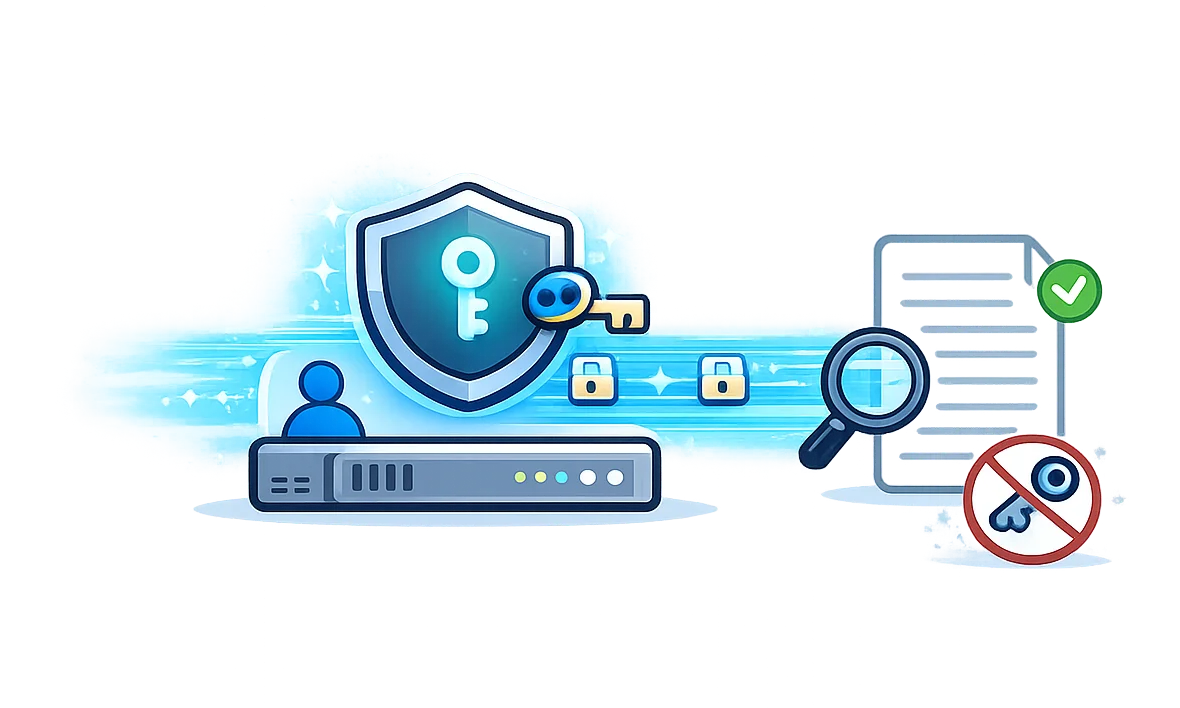
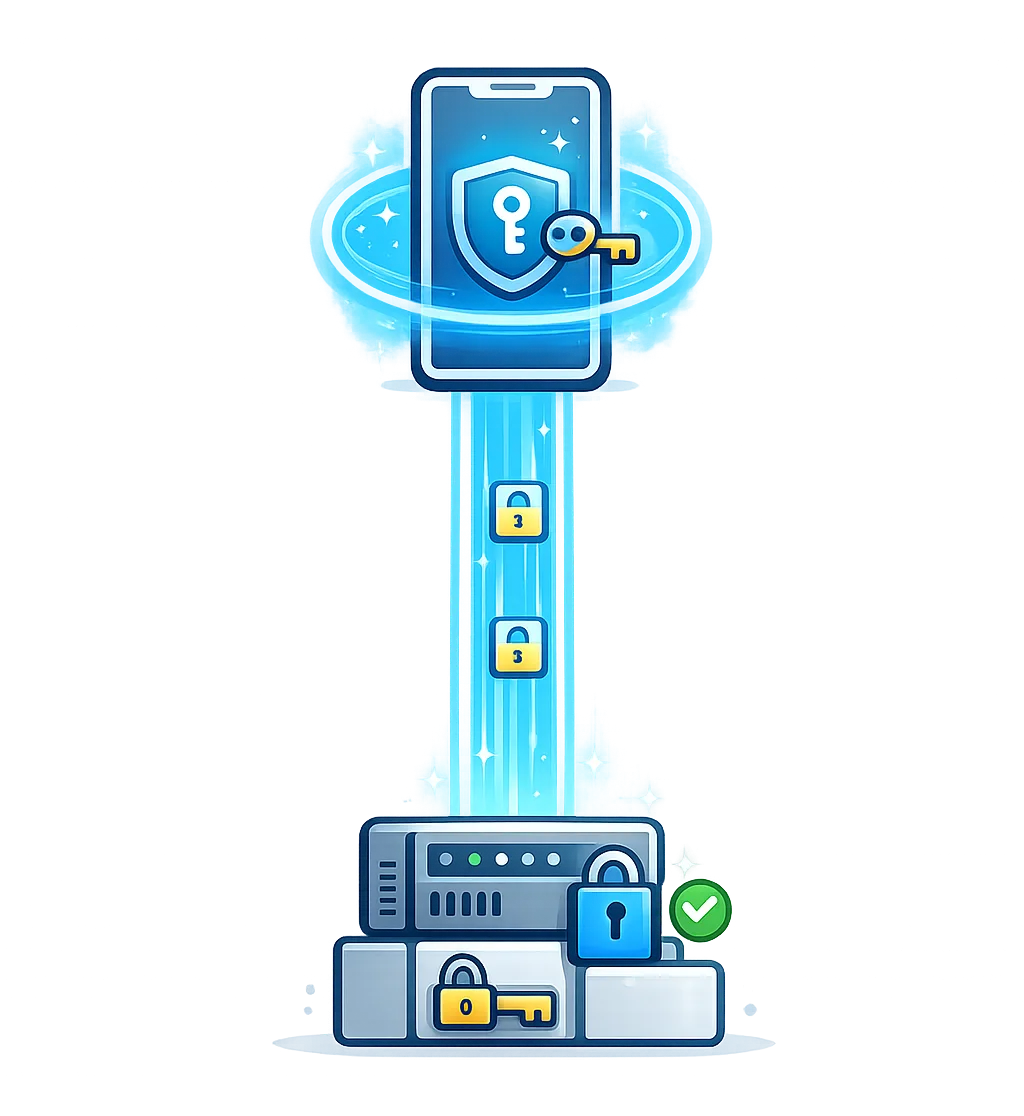
A VPN puts an encrypted tunnel between your device and a server somewhere else. Everything you do goes down that tunnel first and reaches the internet from the server rather than from you, so the network you are sitting on sees an encrypted connection and nothing about what is inside it.
The part that gets skipped is who that actually protects you from. It hides your traffic from the cafe WiFi, the hotel network, the office router and your internet provider, which is a real and useful thing. It does not make you anonymous to the sites you log into, and it does not hide anything from whoever runs the server at the other end.
You End Up Owning What We Build
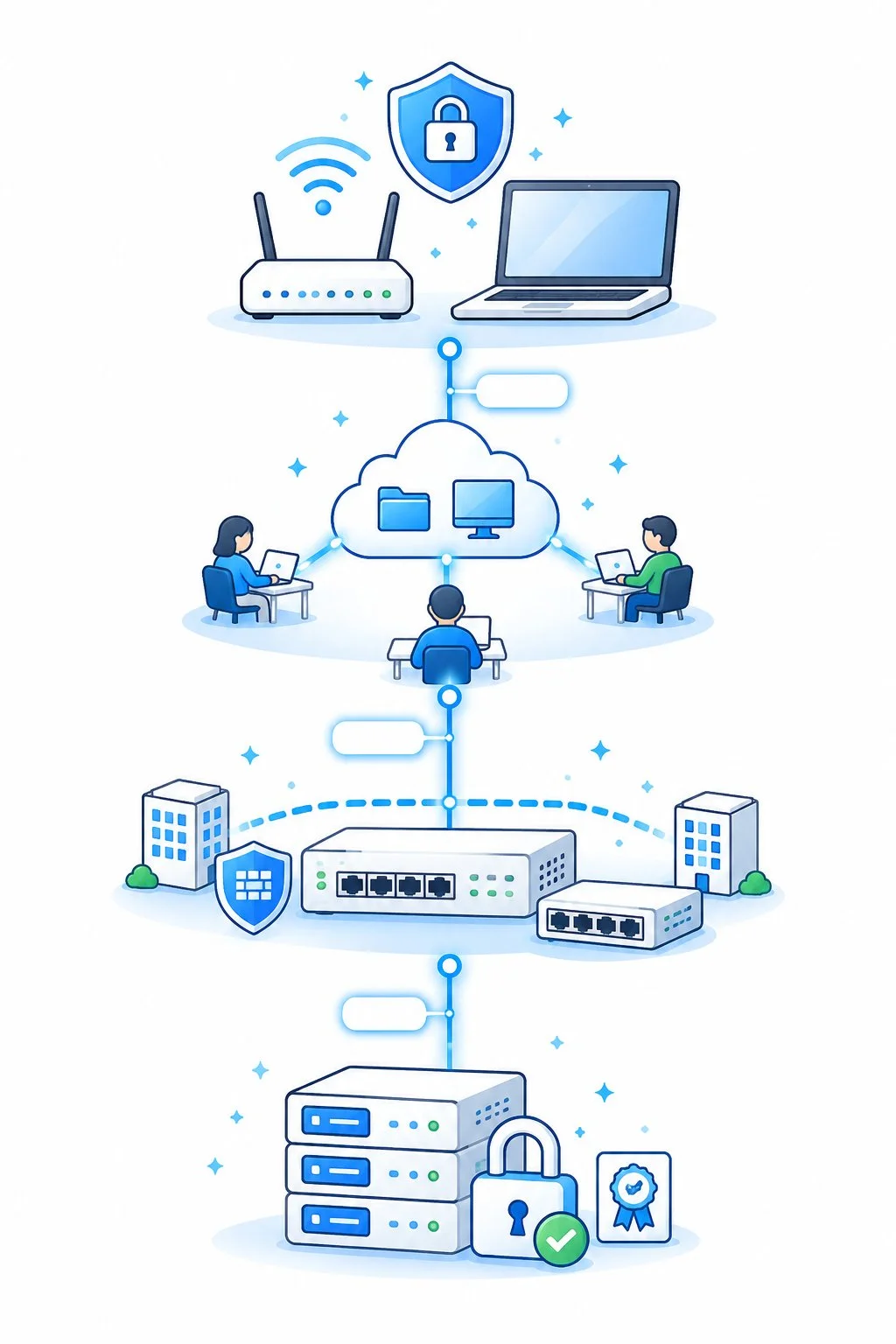
Servers, tunnels, firewalls, cloud environments and the hardening that holds them together. All of it configured on your own accounts and your own hardware, then handed over with the credentials and written notes explaining what is on the machine.
Nothing here runs on infrastructure we control. There is no dashboard you log into, no seat licence that grows with your team, and no month where the service stops because a subscription lapsed. When the job finishes you can change every password on it and it keeps working.
- Read first, change second. Configuration gets looked at before anything is quoted, so the price reflects the actual problem.
- Priced per job. No hourly meter running while somebody reads documentation on your budget.
- Limits stated up front. Every service page says what the work does not cover, before you buy rather than after.
- Left documented. A different engineer can pick it up next year without starting from nothing.
Where the honest answer is that you do not need us, or that the equipment you already own is fine as it is, that is what you will be told on the first call. It costs a few jobs and it saves everybody the ones that were never going to end well.
Secure Connection, Not Just The Subscription
Hotel WiFi, airport lounges, office networks and whatever your internet provider keeps. A tunnel takes your traffic out of all of that, and where the tunnel ends is what decides how much it is worth.
The Network You Are Sitting On Stops Seeing Anything
On a shared connection, everything you send passes through equipment somebody else controls. With the tunnel up, that equipment sees an encrypted stream to one address and nothing about what is inside it. Which sites, which logins, which files, all of it goes past them unreadable.
Fast Enough That You Forget It Is Running
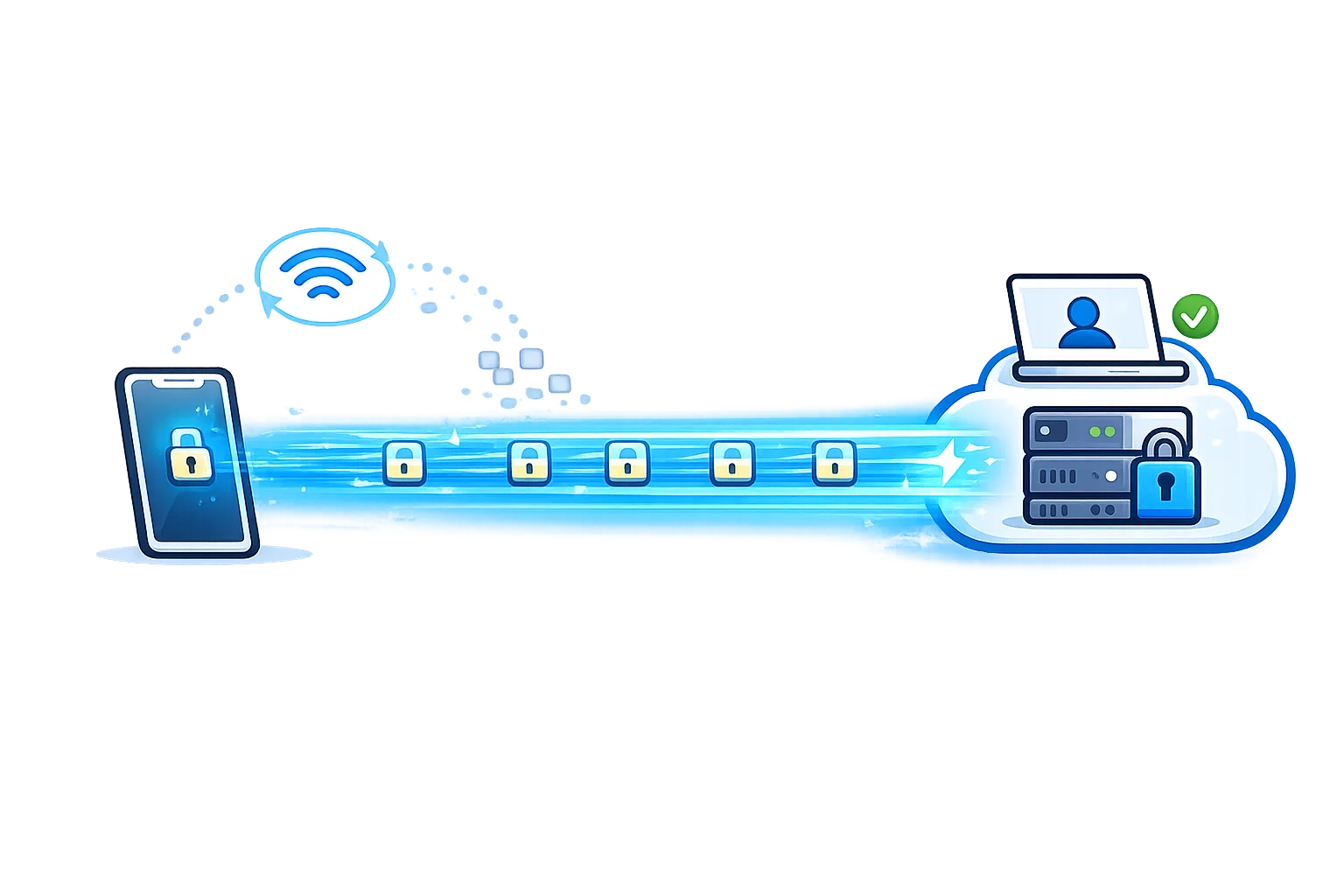
Modern protocols cost you very little speed. WireGuard runs in the kernel and moves data quickly enough that your own connection is usually the slow part, and it reconnects on its own when a phone drops from WiFi onto mobile data. A tunnel you switch off because it is annoying protects you exactly none of the time, so this matters more than it sounds.
On Your Own Server, No Logs Is Checkable
Every provider claims it and you have no way to look. When the machine belongs to you, the claim turns into something you can verify yourself, because you hold the root password and we do not keep a copy. We tell you exactly what the software holds while it runs and what it never writes down anywhere.
Eight Things You Get From Owning The Server
None of these are features we invented names for. They are the practical differences between a machine that belongs to you and a subscription that belongs to somebody else.
What We Set Up For You
Every one of these is configured on your own hardware or hosting account and handed over with the credentials. Pick the situation that matches yours and the page explains what gets built, what it costs to run and where it falls short.
For one person or a household
Privacy Should Not Depend On Trusting A Company
Every commercial VPN asks you to take its word for something you cannot check. The policy says the right things, the marketing says more, and underneath it you are handing every request you make to a business you have never met, sitting in a country you did not choose.
What it does
- Hides your traffic from the local network.
- Keeps your browsing away from your internet provider.
- Gives you one address that is yours alone.
- Reaches your home or office network from outside.
What it does not
- Make you anonymous to sites you log into.
- Stop tracking that follows your account rather than your address.
- Hide anything from your hosting provider.
- Protect a password you have reused somewhere else.
What The Protection Actually Rests On
Five things, none of them invented for a marketing page. If any of them sounds like a product name rather than a plain fact, that is the point at which most VPN pages stop being checkable.
Protocols anyone can read
WireGuard and OpenVPN, both open source, both looked at by more people than any private alternative. Nothing here is a protocol we wrote and named ourselves, which means the security does not depend on trusting us about it.
Standard encryption, not a grade we made up
AES-256 and ChaCha20, the same ciphers your bank and your browser use. There is no military grade tier and no upgrade you are missing. What matters is the configuration around the cipher, and that is the part we do properly.
Every network you sit on
Hotel WiFi, the cafe downstairs, an office router, an airport lounge. With the tunnel up, all of them see an encrypted stream to one address and nothing about what is inside it.
Speed that survives the tunnel
WireGuard runs in the kernel and costs very little throughput, and nobody else is sharing your server. Large downloads and video calls behave normally, which matters because a tunnel you keep switching off protects you none of the time.
No rules about what you run through it
The machine is yours, so there are no bandwidth caps, no throttled protocols and no acceptable use policy written by somebody else. What your hosting provider allows is the only limit, and we tell you what that is before you choose one.
What It Runs On And How Many Of Them
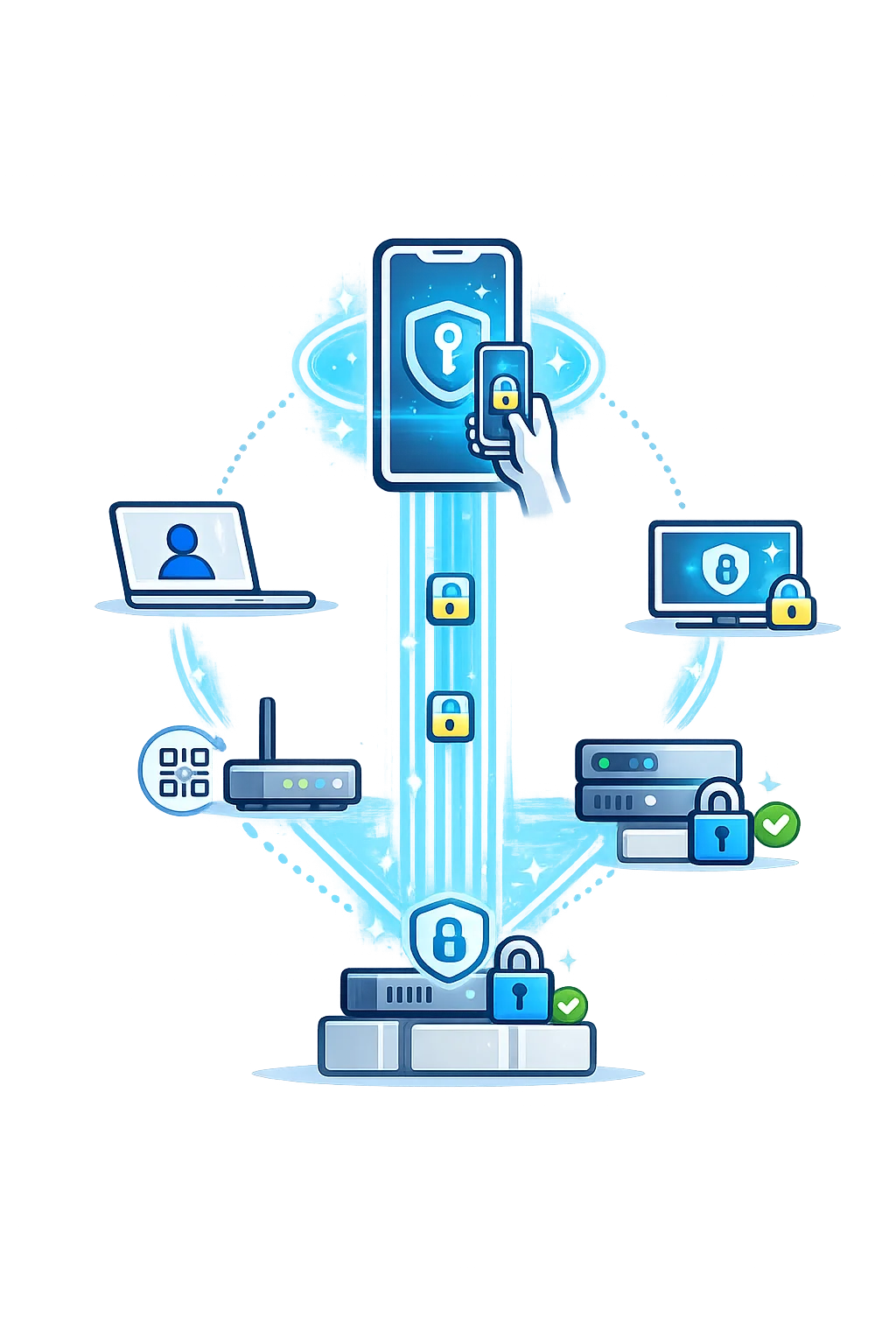
There is no app to download and no device limit to buy your way past. Each device gets its own configuration file and the number of them is your decision rather than a plan tier.
Laptops and desktops
Windows, macOS and every Linux distribution worth naming. The client software is the standard free one for whichever protocol we set up, so there is nothing branded to install and nothing to keep licensed.
Phones and tablets
iPhone, iPad and Android, set up by scanning a QR code rather than typing anything in. On iOS the tunnel can be configured to come back on its own after a restart, so it does not quietly stay off for a week.
Android TV and the boxes plugged into it
Smart TVs running Android, streaming sticks and set top boxes take the same configuration file as a phone. For anything that will not run a client at all, a games console or an older smart TV, the router handles it instead.
A router, if you would rather do it once
Put the tunnel on a router and everything behind it is covered without touching a single device. This is the usual answer for a household, and it is the same setup as the travel router build, only sitting at home permanently.
The protocol picked per device
WireGuard on the things you carry, because it reconnects instantly when the network changes. OpenVPN on TCP 443 kept in reserve for hotel and office networks that block it. IKEv2 where a phone is happier using what is already built into it.
Adding one later is two commands
New laptop, new phone, somebody in the household who needs access. Issuing another key is a short procedure we write down for you at handover, so it does not turn into an email to us every time something gets replaced.
Three Things That Matter More Than Anything We Sell
A tunnel protects the connection. It does nothing about the way most people actually lose an account, which is a password that turned up in somebody else's breach and still worked on yours.
None of these are services we charge for. They cost an evening and they matter more than every technical measure on this site put together, so they are worth saying plainly rather than leaving out because there is no invoice attached.
These companies trust us *
A Different Password Everywhere
Use any reputable password manager, we do not sell one and have no reason to push a particular name. The point is not strength, it is that a password stolen from a forum you forgot about in 2014 cannot open your email today.
A Second Step On Anything That Offers It
An app on your phone rather than a code by text, since text messages can be moved to somebody else's SIM. Turn it on for email first. Almost everything else can be recovered through an email account, which makes that the one that matters most.
Backups You Have Actually Restored
Who Can See What You Do, And Who Cannot
Four groups get a view of your browsing, and a tunnel deals with three of them properly. The fourth is worth being honest about, because it is the one most VPN pages quietly claim to solve.
Your Internet Provider
Every site you reach passes through them, and in a lot of countries they are required to keep a record of it for a period. That record exists whether or not anyone ever asks for it.
Whoever Runs The Network You Joined
Hotel WiFi, the cafe router, a co-working space. Somebody owns that equipment and it sits between you and everything else, which is the part people forget when the connection is free.
Anyone Else On The Same Network
Shared connections put you alongside people you have never met. Most of them are harmless. It only takes one who is paying attention to what the rest of the room is doing.
EROthots Protect Your Privacy
An Address Used By You Alone
Not a shared exit with hundreds of other subscribers behind it. Yours means no inherited reputation, no security checks caused by strangers and something you can add to an allow list.
Name Lookups Go Down The Tunnel
When you connect to our servers, you share the same IP address with other users. This makes it much harder for anyone to link your online activity to you individually.
IPv6 Handled Rather Than Ignored
A tunnel carrying only IPv4 while your connection quietly uses IPv6 for some traffic is the other common leak. Both are dealt with and we check it rather than assuming.
Nothing To Certify, Because It Is Yours
Popular Global Fast VPN Network Servers
Are There Any Other Questions?
Fill out the form and we will call you back.